Kyoto, located in the central part of Japan's main island of Honshu, is a city steeped in history and culture. With 17 UNESCO World Heritage sites, over 2,000 temples and shrines, and traditional gardens and streets, it is no wonder that Kyoto is often considered the cultural heart of Japan.
One of the must-see attractions in Kyoto is the Fushimi Inari Shrine, famous for its thousands of vermilion torii gates that lead up to the sacred Mount Inari. Visitors can hike to the summit for a panoramic view of Kyoto and its surroundings.
Another popular attraction is the Kinkaku-ji Temple, also known as the Golden Pavilion. The temple's top two floors are covered in gold leaf and offer a stunning reflection on the pond below. The temple's gardens are also a must-see, featuring a traditional Japanese landscape garden with a pond and a small island.
Kyoto is also home to several historic castles and fortresses. The Nijo Castle, built in 1603, is a fine example of feudal era architecture and features a nightingale floor, which makes chirping sounds when walked on to alert the residents of intruders.
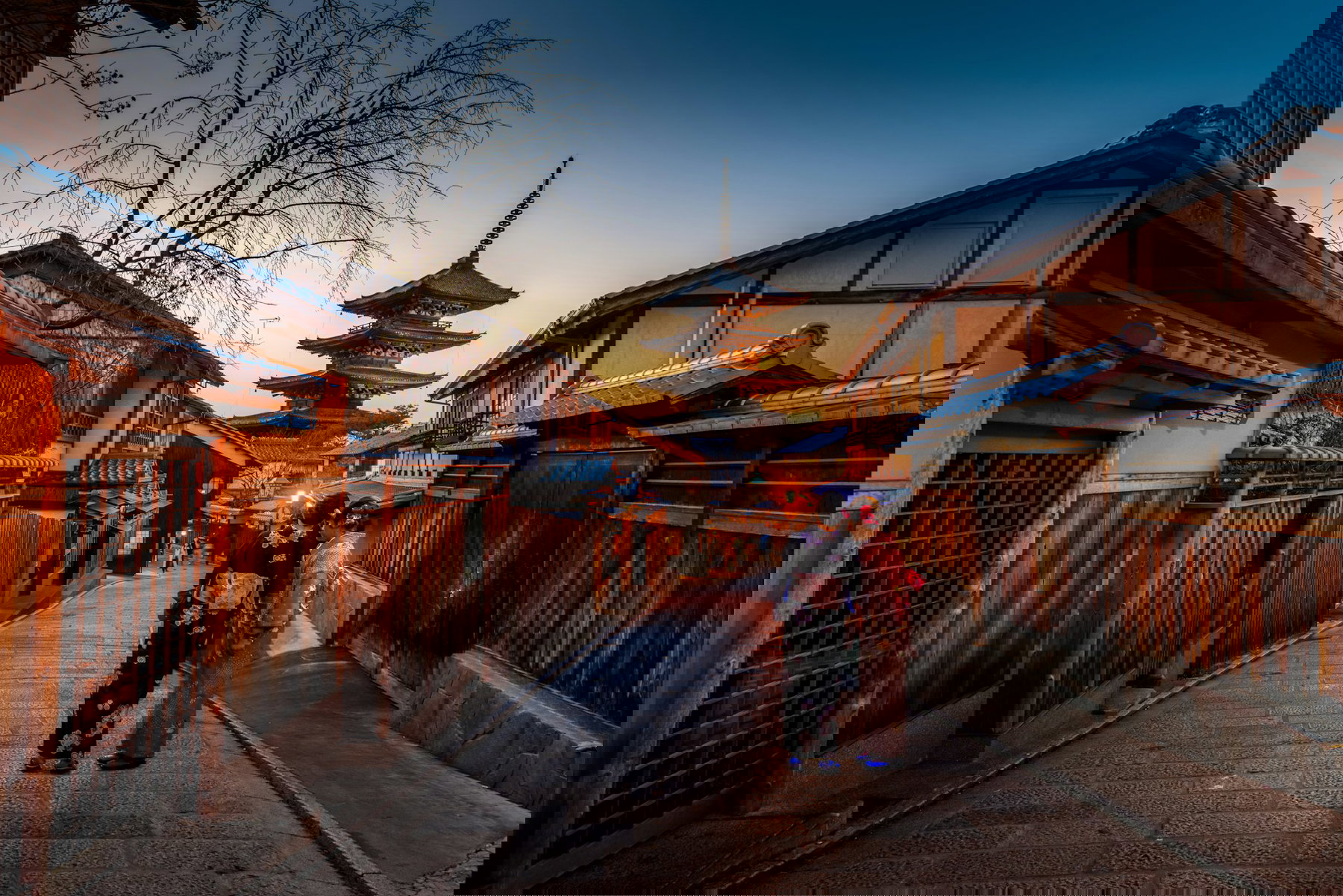
The city also has a number of traditional streets and districts that are worth visiting. The Gion district is known for its geisha and maiko (apprentice geisha) sightings, as well as its traditional architecture and teahouses. The Higashiyama district is also popular for its preserved traditional streets, temples, and shops.
Kyoto is also known for its traditional gardens, such as the Ryoan-ji Temple's Zen garden, which is considered one of the most famous Zen gardens in Japan. Another must-see is the moss garden at the Saiho-ji Temple, which is considered one of the most beautiful moss gardens in Japan.
Kyoto is also a great place to experience traditional Japanese culture, such as tea ceremonies, flower arranging, and traditional Japanese music and dance. Many temples and cultural centers offer classes and workshops for visitors to learn about and experience these traditional arts.
Kyoto is also famous for its food, particularly its kaiseki ryori, which is a traditional multi-course meal that is considered an art form in itself. Visitors can try kaiseki ryori at one of the many traditional ryokan (Japanese inns) or high-end restaurants in the city.
In addition to traditional Japanese food, Kyoto is also home to a number of international restaurants and cafes, making it a great destination for travelers with diverse tastes.
Kyoto is easily accessible from Tokyo and other major cities in Japan by train. To move around the city, visitors can use the bus and subway systems, and for getting around the city center, walking and cycling are also popular options.
In conclusion, Kyoto is a city that offers a unique blend of history, culture and natural beauty that visitors should not miss. From traditional temples and shrines, to traditional streets and districts, to traditional gardens and art forms, Kyoto has something for everyone.

 Lambus


